
The Nature Conservancy

| The Golden Rule is that whoever holds the wealth or financial power dictates how things are done. So follow the money to find out who is deciding the agenda. There are two primary factors involved, who are they getting funding from and who they are funding. |
| Most of the linked and non-linked Canadian organizations are (Green Funding) both a federal and provincial tax write-off. So instead of contributing to medical services, hospitals, and healthcare programs in our province or nation, they avoid paying taxes by giving the funds to radical environmentalists, funding the the Climate Imperative. Almost every organization listed below subscribe to the the Climate Imperative. |
 American money does flow to the Nature Conservancy of Canada (NCC). There is a documented cross-border channel, although it is important to distinguish American charitable donations from money transferred directly by the US-based Nature Conservancy.
 Fidelity Investments Charitable Gift Fund |
Anne Ray Foundation |
National Fish and Wildlife Foundation |
| Donor Advised Charitable Giving Inc. |
The Greater Cincinnati Foundation |
Vanguard Charitable Endowment Program |
| The Chicago Community Trust |
Gordon and Betty Moore Foundation |
Federal Liberal Government |
| BC NDP Government | The American Tides Foundation |
As shown below The Nature Conservancy originated out of the United States and created a Canadian Branch, that is in large part government funded, meaning taxpayer dollars. Both the Federal Liberal Government and the BC NDP Government are funding it with our money.
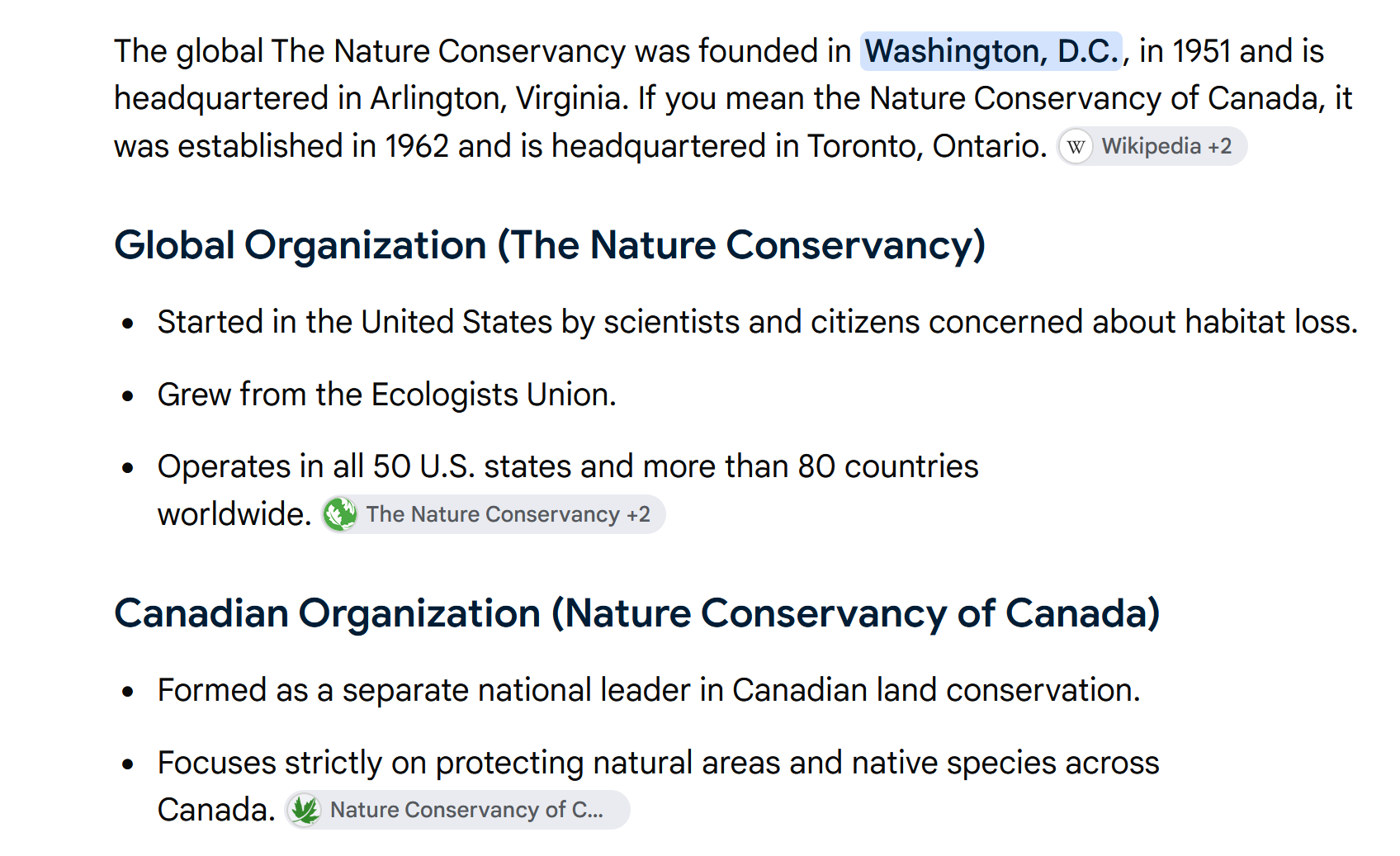
The Nature Conservancy of Canada (NCC) is a registered Canadian charity. Its funding comes from a mix of private and public sources rather than a single funder.
According to its 2023–2024 annual report, its average funding over the previous five years was approximately:
- 44% Government funding – from federal, provincial, and municipal governments for conservation projects and land protection.
- 22% Individual donors – donations from Canadians, major gifts, and bequests.
- 15% Foundations and organizations – grants from charitable foundations and other nonprofit organizations. (hidden donors) (The Nature Conservancy (TNC) and MakeWay (formerly Tides Canada) have frequently collaborated and co-funded major joint conservation initiatives.
- 9% Corporate funding – partnerships and donations from businesses.
- 10% Other sources – including investment income and other revenue.