
Majority of Canadians Support New Pipeline Construction and Reforms in Project Approval Process
We thought this last update for 2025 was worth sharing, even if we did not write it.
Montréal, QC, December 16, 2025 — A survey conducted by Ipsos on behalf of the Montreal Economic Institute indicates strong support for energy development projects, with a notable desire for regulatory reform to facilitate these projects more efficiently.
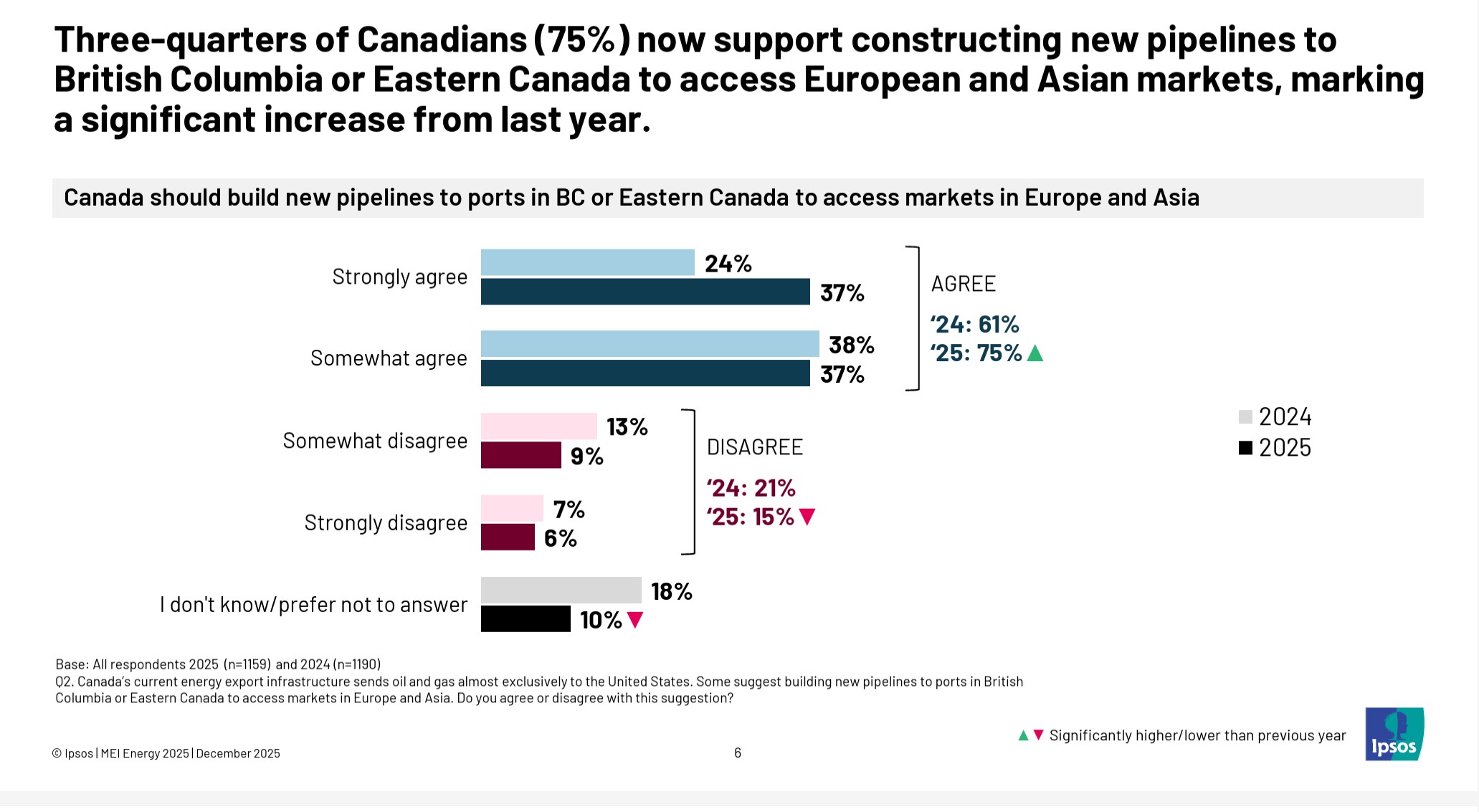
Specifically, 75% of Canadians are in favor of constructing new pipelines to British Columbia or Eastern Canadian ports. This infrastructure is seen as crucial to accessing European and Asian markets, reflecting an increase from 61% support in 2024.
A strong majority, 71% of Canadians, believe that the federal approval processes for large projects, including mines, power lines, rail lines, and pipelines, are too slow and require reform. This sentiment indicates a growing consensus for efficiency and expedience in large-scale project management and delivery.
The survey also shows that 67% of Quebec residents back the Marinvest liquefied natural gas (LNG) project, which aims to export LNG to European countries, such as Germany. This project could be an important option for supplementing any reduction in Russian natural gas supply.
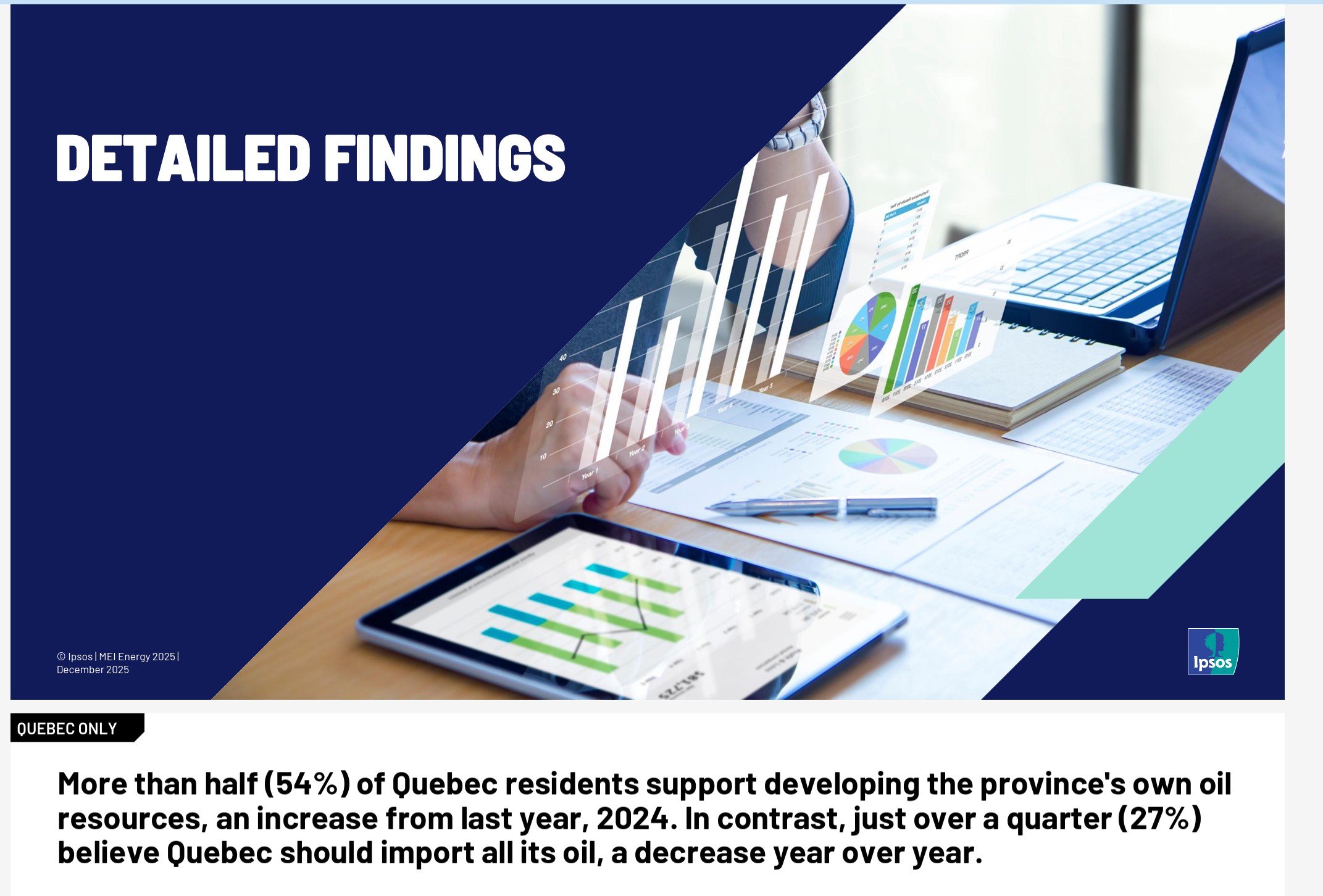
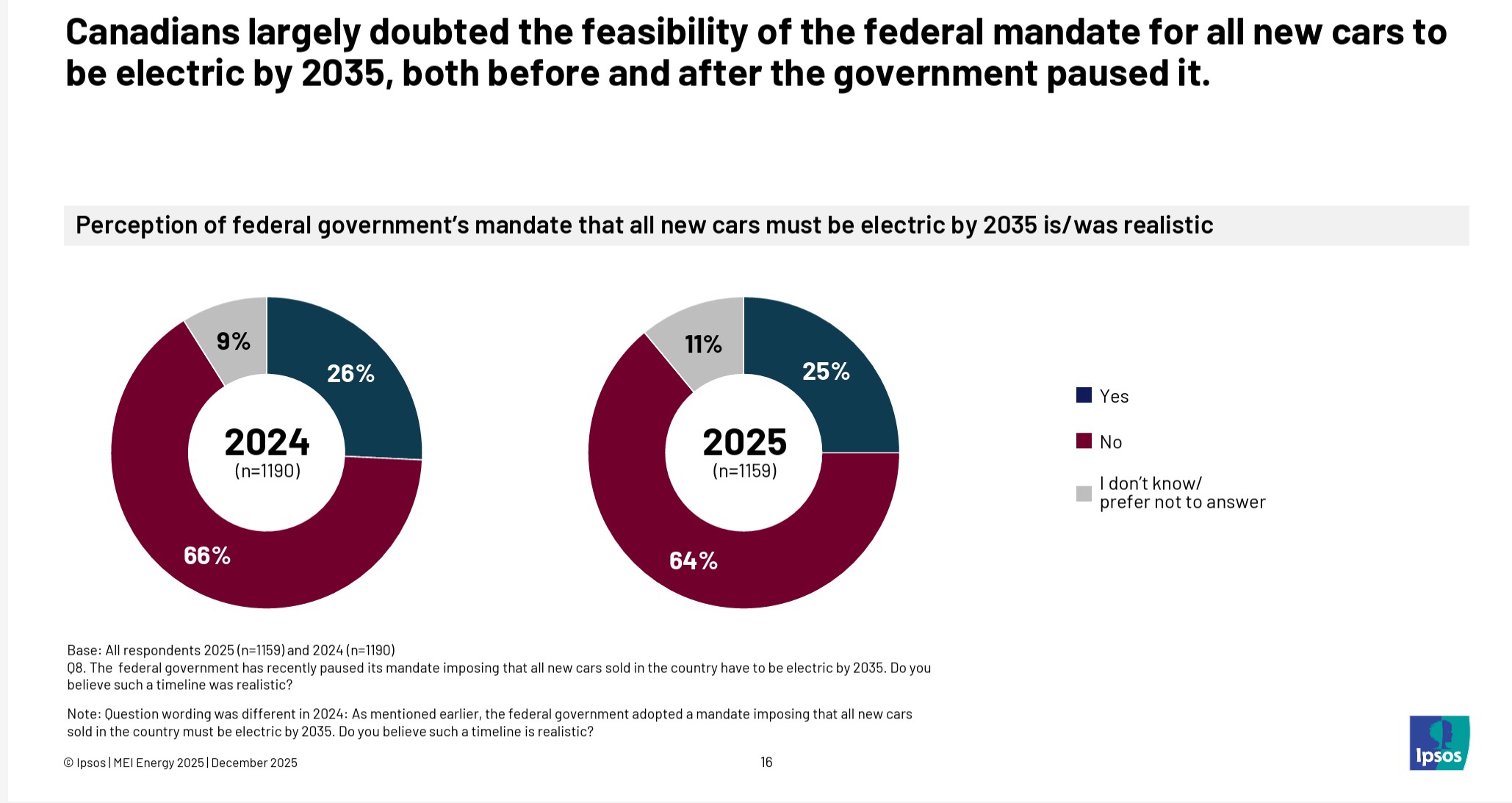
For more details on this research, which also explores the support in Quebec for developing the province’s own oil resources and delves into Canadians’ opinions on electric cars, including their perceptions of feasibility and barriers to adoption, please download the full study report.
About the Study
These are some of the findings of an Ipsos poll conducted between the 27th of November and 2nd of December 2025, on behalf of the Montreal Economic Institute. For this survey, a sample of 1,159 Canadian adults aged 18+ years was interviewed, including an oversample of 382 residents of Quebec. Quotas and weighting were employed (age, gender and region) to ensure that the sample’s composition reflects that of the Canadian population according to census parameters. The precision of Ipsos online polls is measured using a credibility interval. In this case, the poll is accurate to within ± 3.5 percentage points, 19 times out of 20, had all Canadians aged 18+ been polled. The credibility interval will be wider among subsets of the population. All sample surveys and polls may be subject to other sources of error, including, but not limited to coverage error, and measurement error.
For more information on this news release, please contact:
Derek Brasier
Vice President, Ipsos Public Affairs